Geopolitics
Trump "Chaos by Design": Tariffs, China and a Cooling US Jobs Market

Christopher Gerace
5 Minutes

Capital Group's John Emerson on Trump's "chaos by design", the US-China shift from engagement to decoupling, and what a cooling jobs market means for rate cuts.
Equity markets rose again overnight, recovering most of the mid-week sell-off. Attention now turns to U.S. employment data due tonight, alongside ongoing bond market volatility and political uncertainty around fiscal and debt uncertainty. According to the CME FedWatch tool, there is a 99.3% probability of a Fed rate cut, which should continue to support growth companies and the technology sector.
Commentary from Industry Leaders
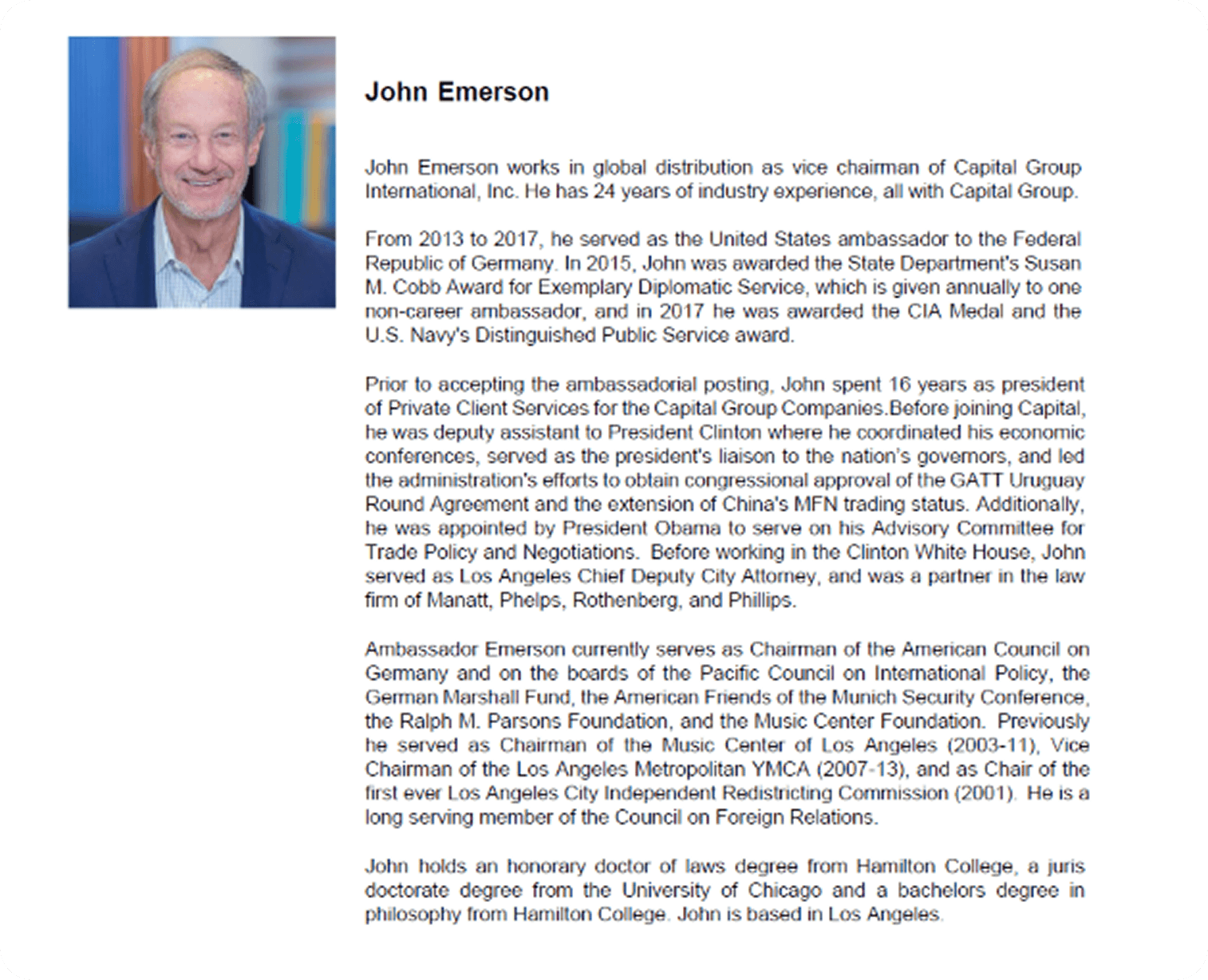
Today our Head of Private Wealth, Phil Hand met with John Emerson, who is a Geopolitical Adviser and Vice Chairman of Capital Group International.
Trump Administration
The 1st term was chaos through inexperience; the 2nd term is chaos by design.
John described the start to this Administration as “flood the zone, move fast, break things”.
John felt this has led to the most change affected by an Administration since FDR, who came to power during the Great Depression.
Trump's views on Tariffs
The tariffs have been implemented for the government to raise money
Greater balance with partners (feels some countries have abused their relationship with the US).
Believes they will help build manufacturing in the country
Useful to achieve nontrade related outcomes; Think of early tariffs in the regime with Mexico and China to try and affect the Fentanyl issue in the US.
Interestingly on manufacturing, this was something Biden was also trying to achieve. He, though, was offering the carrot of subsidies, whereas, Trump is all stick with tariffs.
China
Over the past 30 years he feels the US strategy was originally - Engagement
With Biden it changed to - Derisking
Now with Trump it's moving towards - Decoupling
Trump on Europe
2 objectives
Economic - address the imbalance. As an example, the EU has had tariffs on the import of US cars for a considerable time.
Defence - Also part of the former point, in that, wants Europe to pay more for its own defence. The increase to spending 5% of GDP on defence which was agreed earlier this year, allows within it for 1.5% of that money to be spent on infrastructure.
Economic News
US Payroll
The latest U.S. data on Thursday confirmed signs of a slowing labour market. Private payrolls rose by just 54,000 in August, well below the 75,000 expected by economists, while weekly jobless claims increased to 237,000, also above forecasts. Together, the numbers suggest the American job market is cooling more quickly than anticipated.
For investors, this raises the odds of Federal Reserve rate cuts, which typically support equities and bonds by lowering borrowing costs. However, if the weakness in employment becomes too pronounced, it could shift sentiment from optimism about policy easing to concern over the underlying health of the U.S. economy. This highlights the importance of maintaining balance in portfolios, capturing potential upside from rate cuts while holding defensives to protect against growth shocks.
China, Russia, India
Last week I wrote about President Trump implementing a 50% tariff on Indian imports, one of the harshest trade penalties currently in place. This week, Indian Prime Minister Narendra Modi met with Vladimir Putin and Xi Jinping at the Shanghai Cooperation Organisation summit in Tianjin. The public display of unity among these three influential economies highlights the risk of increased geopolitical fragmentation, which could deepen trade wars, expand sanctions, and ultimately lead markets to price in more risk.
For investors, this creates an environment of elevated policy uncertainty and strategic divergence, making geopolitical awareness and careful regional allocation increasingly important in portfolio planning. Investors with exposure to emerging markets may need to be selective, focusing on supply-chain winners in countries outside of these geopolitical fault lines, where global companies are redirecting investment and manufacturing to avoid tariff and sanction risks.
Market Snapshot
S&P 500 closed at all-time highs
Bond yield declined overnight
The ASX is rising today led by retail, big four banks, tech and real estate.
Key Events Coming Up
Friday 5 September: US Unemployment Rate (Aug)
Friday 5 September: US Nonfarm Payrolls (Aug)
Investment Opportunity
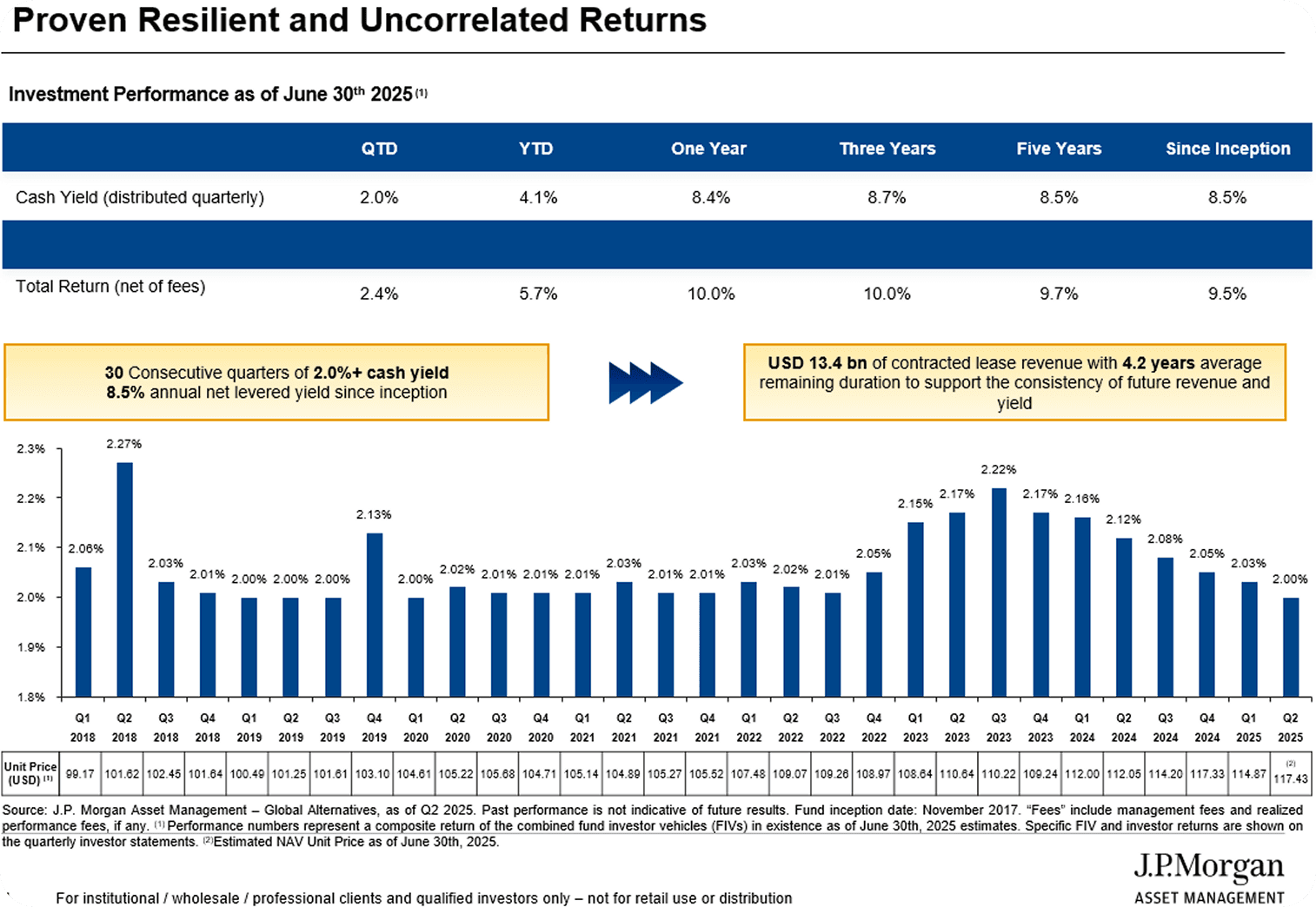
This week we had the opportunity to review a unique offering from J.P. Morgan Asset Management – the Global Transport Fund (GTF).
The fund provides exposure to transport and logistics assets that are critical to the global economy, with a focus on long-term, contracted income streams.
The minimum investment into this fund is US$10 million. Through our relationship, we are able to provide access with a minimum commitment of just AUD $100,000.
Offer open: 1 September 2025
Close: 24 October 2025
Investment Attributes
Large-scale assets (USD 50 – 500+mm)
Supply-chain critical and modern, with 25+ years of useful life
Lease Attributes
Long-duration (5–15+ years), non-cancellable leases
USD-denominated income with built-in inflation protection
Counterparty Attributes
Strong credit profiles and industry leaders
Deep financial bases with long-term relationships
Key Highlights
30 consecutive quarters delivering 2%+ quarterly cash yield
Since inception (2017): 8.5% net levered annual yield and 9.5% net total return
US$7bn in commitments across 16 platforms and 155 assets
Among the top 10 global owners in ships, containers, and rail, plus Denmark’s leading eBus operator
USD $13.4bn of contracted lease revenue, with an average 4.2-year remaining duration
Investing in Next-Generation, Energy-Efficient Transport
Railcar Leasing Platform (North America): Freight by rail emits ~75% less greenhouse gases than trucking; one train removes 300+ trucks from roads.
Partnership with Royal Dutch Shell: Construction of 4 Super-Eco tankers and 5 LNG carriers.
Windfarm Service Vessels: 4 assets dedicated to the installation and maintenance of European wind turbines.
Denmark’s eBus Leader: ~18% market share and the country’s largest electric bus fleet, aligned with the Danish government’s mandate for all urban buses to be zero-emission by 2030.